Last reviewed: May 21, 2026.
Note: This guide is for informational purposes only and is not financial advice. Pricing and features change frequently. Always confirm current plans on the official ChatGPT pricing page and OpenAI before subscribing.
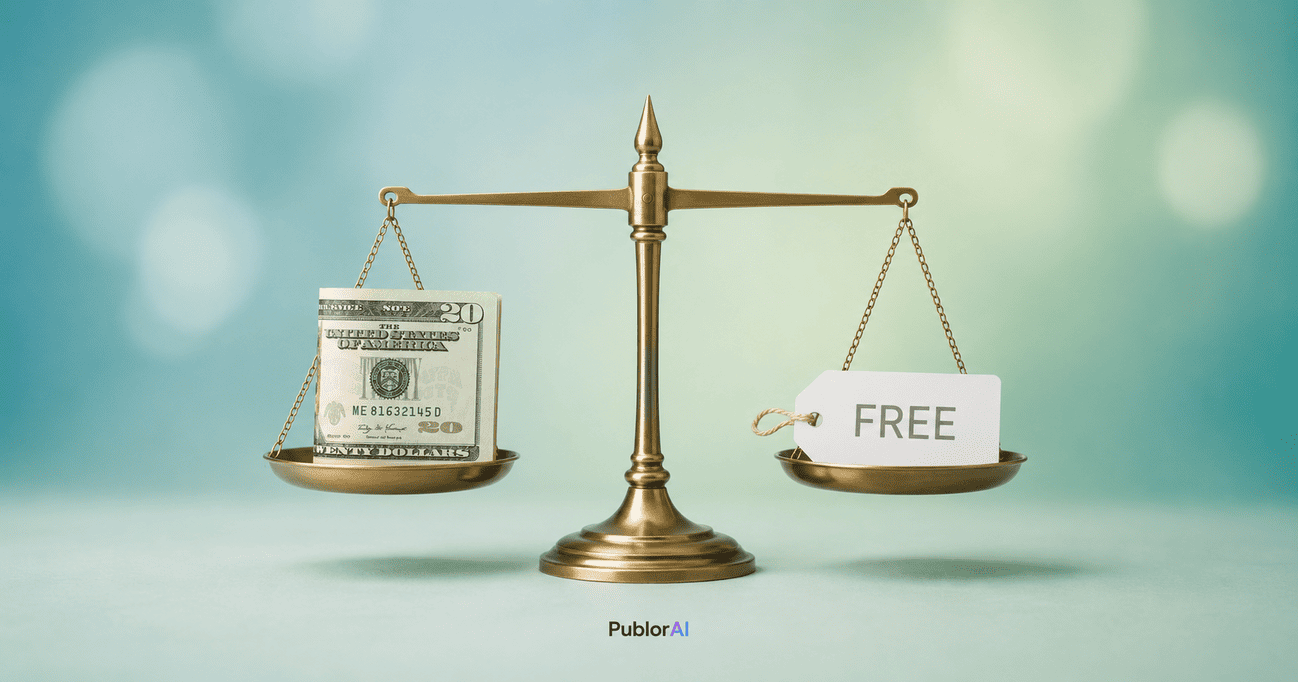
ChatGPT Plus vs Free is the most common AI subscription question of 2026, and after I tested both side by side for two weeks on real work, my honest answer is that it depends on how heavily you actually use ChatGPT. Free now runs GPT-5.3 with 10 messages per 5 hours before dropping to the mini model, while Plus at $20 per month runs the newer GPT-5.5 with 400 to 2,000 messages per 5 hours, plus voice with video, custom GPTs, the Codex coding agent, image Thinking Mode, deep research, memory, and no ads. For casual chat once or twice a day, Free is genuinely enough. For daily writing, coding, or research work, the $20 Plus pays for itself within a week through saved time alone. The honest middle answer: start free, upgrade the moment you hit the message limit twice in one day.
The Honest Question You Should Ask First
The real ChatGPT Plus vs Free decision is not “which is better” (Plus is better at almost everything) but “is the gap actually worth $20 of yours per month for the way you use it.” That is the framework this guide uses. The 5 things that move the answer are model access, message limits, voice and image features, custom GPTs and agents, and the ad-free experience plus memory and Deep Research. If you are also weighing other AI subscriptions at the same price, our ChatGPT vs Claude vs Gemini 3-way test covers how the three flagship $20 plans compare side by side.
ChatGPT Free in One Paragraph
Free gives you GPT-5.3 Instant with a 10-message-per-5-hours cap before the chat drops to a smaller mini model for the rest of the window. You get basic image generation (Images 2.0 Instant Mode), web search, and standard chat. You do not get the newer GPT-5.5, voice with video, custom GPT creation, the Codex coding agent, image Thinking Mode, Deep Research, or memory. Since February 9, 2026, US Free users also see ads below responses. Free is real and usable, but with hard limits. Whichever tier you choose, the same privacy rule applies: there is information you should keep private from ChatGPT on any plan.
ChatGPT Plus in One Paragraph
Plus at $20 per month runs GPT-5.5 (the current flagship, launched April 23, 2026) with 400 to 2,000 messages per 5-hour window depending on demand, voice with video, custom GPTs (create and share), the Codex coding agent, image Thinking Mode (with reasoning and character consistency across up to 8 images), Deep Research, memory across chats, projects and tasks, higher file and conversation limits, early access to new features, and no ads. It is the same $20 it has been since launch, with substantially more capability behind it now.
The 5 Things That Actually Matter
The ChatGPT Plus vs Free gap shows up in five places that move the buying decision. Score yourself against each before paying $20.
1. Model Access (GPT-5.5 vs GPT-5.3)
Plus runs the current flagship GPT-5.5, Free runs the older GPT-5.3 Instant. GPT-5.5 is meaningfully better at coding, complex reasoning, and long instructions, and it makes fewer hallucinations on technical tasks. For casual questions the gap is small. For real work the gap is real.
2. Message Limits (10 vs up to 2,000 per 5 hours)
This is the single biggest day-to-day difference. Free caps you at 10 messages per 5 hours on GPT-5.3 before downgrading to the mini model; Plus gives you 400 to 2,000 messages per 5-hour window. If you ever find yourself rate-limited mid-task on Free, you will feel it. Those same capacity limits are a big reason ChatGPT freezes or stops responding at peak times. If you chat a few times a week, you never will.
3. Voice, Image Generation, and Custom GPTs
Plus wins clearly on creative output. You get voice with video (real-time conversation including camera), image Thinking Mode (smarter generation with web-search-aware visuals and character consistency), and the ability to create and share your own custom GPTs. Free gets basic Instant Mode image generation and standard chat only.
4. Codex Agent, Deep Research, and Memory
Plus unlocks the Codex coding agent (works across files like a junior engineer), Deep Research (multi-step research with cited sources), memory (the AI remembers your context across conversations), and projects/tasks (persistent workspaces). Free has none of these. For developers and serious researchers, this group of features alone is worth the $20.
5. Ads and Experience
US Free users now see ads under their responses (rolled out February 9, 2026). Plus removes them entirely. If you live in ChatGPT for hours a day, the ad-free experience plus higher limits is genuinely worth the money.
ChatGPT Plus vs Free: Feature Comparison
The fastest way to see the gap is side by side. This table summarises every meaningful difference.
| Feature | ChatGPT Free | ChatGPT Plus ($20/month) |
|---|---|---|
| Default model | GPT-5.3 Instant | GPT-5.5 |
| Message limit | 10 per 5 hours (then mini) | 400–2,000 per 5 hours |
| Voice mode | Basic | Voice with video (advanced) |
| Image generation | Instant Mode only | Instant + Thinking Mode (advanced) |
| Custom GPTs | Use only (limited) | Create and share |
| Codex coding agent | No | Yes |
| Deep Research | No | Yes |
| Memory across chats | No | Yes |
| Projects and tasks | No | Yes |
| Ads | Yes (US Free users) | No |
| Early access to new features | No | Yes |
| Price | Free | $20/month USD |
ChatGPT Plus vs Free: The $20 Pricing Math
The honest way to decide if $20 a month is worth it is to look at your real usage, not the feature list. The break-even on Plus is roughly 30 minutes of saved time per week at any reasonable US freelance rate.
- If you use ChatGPT 0–3 times per week (casual): Free is genuinely enough. $20 is wasted.
- If you use it daily but lightly (5–15 messages a day): Free still works most days, but you will hit limits during heavy sessions. Borderline.
- If you use it daily for real work (writing, coding, research): Plus is the right buy. The message limits alone justify it, and Deep Research plus Codex plus memory compound the value.
- If you bill clients for work AI helps you produce: $20 is a rounding error. The break-even is one hour saved per month at almost any US hourly rate.
For US freelancers and creators, the practical answer is that Plus pays for itself within a single project. Our guide on how to make money with AI in 2026 covers what people are charging for AI-assisted work right now.
My Scoring on Each (After Two Weeks)
I ran the same writing, coding, and research tasks through both for two weeks. My honest ChatGPT Plus vs Free scoring across the 5 things that actually matter:
- Model quality: Free 7/10 (GPT-5.3 is still good), Plus 9/10 (GPT-5.5 is clearly better on real work)
- Limits / reliability: Free 5/10 (hit limits twice on busy days), Plus 9/10 (never hit limits)
- Voice / image / GPTs: Free 5/10 (basic), Plus 9/10 (best in class)
- Codex / Deep Research / memory: Free 2/10 (missing), Plus 9/10 (real differentiators)
- Experience / ads: Free 6/10 (ads now), Plus 10/10 (clean, focused)
Average: Free 5/10, Plus 9.2/10. The gap is real but it only matters if you use the missing features.
Who Should Pick Which (Honest Recommendations)
The ChatGPT Plus vs Free pick should match your real usage, not your aspiration. Score yourself honestly against the list below.
- Stay on Free if you are: a casual user, a student doing light homework, anyone using ChatGPT a few times a week, or someone testing whether AI is useful for your life at all
- Upgrade to Plus if you are: a writer or marketer producing daily, a developer using AI on real code, a researcher with long documents, anyone whose work output AI directly improves
- Upgrade to Plus if you have already: hit the Free message limit twice in one day in the same week (that is your signal)
- Skip both and try Claude Pro at $20 first if you are: primarily a writer or coder, our Claude vs ChatGPT 2026 comparison covers why Claude wins for those use cases
- Run two ($40 total) if you are: a serious creator or developer. See our ChatGPT vs Claude vs Gemini 3-way test for the best two-tool stacks
Free Alternatives Worth Considering
If $20 a month is too much right now, there are real free alternatives that go further than ChatGPT Free.
- Claude Free (limited Opus 4.7), better writing quality than GPT-5.3, capped daily
- Google Gemini Free, gives daily Gemini 3.1 Pro plus 1 million token context for long documents
- DeepSeek and other free models, solid for general chat, much cheaper at the API tier
For a fuller list, see our roundup of the best free AI tools in 2026. The smart play is to use the free tiers of two providers (e.g., Gemini Free + Claude Free) to cover the gaps ChatGPT Free leaves.
Frequently Asked Questions
ChatGPT Plus vs Free: is Plus worth $20 in 2026?
For daily users, yes. ChatGPT Plus at $20 per month is genuinely worth it if you use ChatGPT for writing, coding, or research most days, because the message limits, GPT-5.5, Codex agent, memory, and Deep Research save real time. For casual users (a few chats per week), Free is enough and $20 is wasted.
What does $20 ChatGPT Plus actually get me that Free doesn’t?
The big ones in 2026: GPT-5.5 (vs GPT-5.3 on Free), 400–2,000 messages per 5 hours (vs 10), voice with video, image Thinking Mode, custom GPTs, the Codex coding agent, Deep Research, memory across chats, projects and tasks, no ads, and early access to new features.
Is free ChatGPT enough for most people?
For casual everyday questions, yes. ChatGPT Free in 2026 runs GPT-5.3, includes basic image generation, and handles most light tasks well. It stops being enough the moment you hit the 10-message-per-5-hours cap during real work or need voice with video, custom GPTs, or any of the Plus-only features.
How do ChatGPT Plus limits compare to Free?
Free gives 10 messages per 5 hours on GPT-5.3 before downgrading to a smaller mini model. Plus gives 400 to 2,000 messages per 5-hour window depending on system demand, on the better GPT-5.5 model. In practice, Plus users almost never hit limits during normal use.
Does free ChatGPT have GPT-5.5?
No. As of May 2026, GPT-5.5 is available only on Plus, Pro, Business, and Enterprise plans (launched April 23, 2026). The free tier stays on GPT-5.3 Instant with the mini model fallback after the 10-message limit. If GPT-5.5 access matters to you, Plus is the cheapest way in.
Should I cancel ChatGPT Plus?
The ChatGPT Plus vs Free cancel decision is simple: cancel Plus if you have used ChatGPT less than 5 times in the past month, never hit a free-tier limit, and do not use voice with video, custom GPTs, the Codex agent, or Deep Research. Otherwise keep it. If you cancel and miss it within two weeks, just resubscribe, there is no penalty.
Final Verdict
The honest ChatGPT Plus vs Free answer in 2026 is that Plus is better at almost everything, but Free is real and usable for casual use. If your weekly ChatGPT habit is light, save your $20. If you use it daily for real work, the upgrade pays for itself within a single week through the message limits and the Codex, Deep Research, and memory features alone.
My personal pick if I had to choose one plan today as a working creator: Plus, no hesitation. The $20 is the easiest software subscription I pay for. For a writer or coder specifically, our Claude vs ChatGPT 2026 piece argues Claude Pro at the same $20 is the smarter spend.
For a deeper look at the OpenAI side specifically, our GPT-5.5 vs GPT-5.4 breakdown covers exactly what changed in the current flagship model that Plus unlocks.